
West Texas geology creates unique water challenges
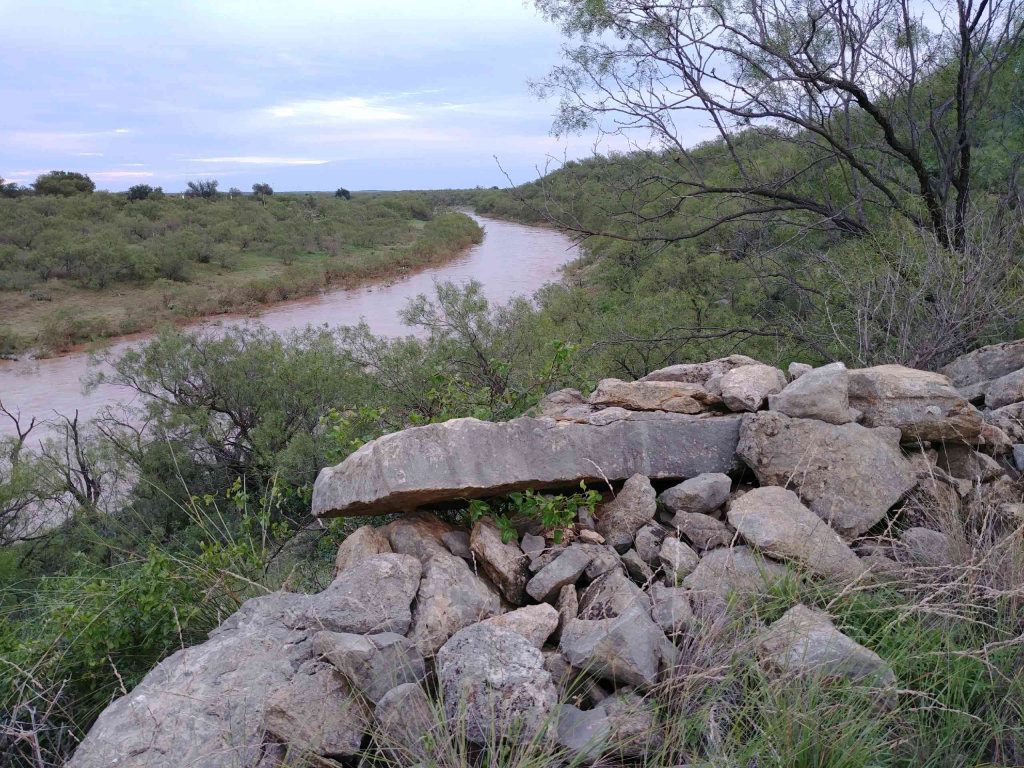
Courtesy Texas Water Board – https://texaswaternewsroom.org/ – West Texas sits atop some of the most geologically complex groundwater systems in the United States. Thick Permian sediments, uranium- and thorium-bearing formations, and vast evaporite deposits create a natural environment where trace elements can migrate into aquifers at elevated levels. As a result, many public water systems in this region must deal with naturally occurring radium, arsenic, and lithium in their source water. These elements are not new to the landscape—what has changed is our ability to detect them at lower concentrations and a focus on long-term human health.
For water providers, multiple treatment options exist to remove these substances and make water safe for general use—ion exchange, adsorption, and reverse osmosis membrane systems—but choosing the right technology depends on the chemistry of each aquifer.
What makes West Texas geology unique
Key Definitions
- Brine – A high-concentration solution of minerals (like salt) in water, containing more than 35,000 mg/L total dissolved solids.
- Evaporative concentration – As evaporation occurs at the surface of the liquid, the solution becomes stronger.
- Evaporite field/deposit – A geological formation typically found in arid or semi-arid environments where the rate of evaporation exceeds the rate of precipitation. The minerals found in these fields are often the result of the concentration and crystallization of dissolved salts from water bodies.
- Ion exchange – Ion exchange is a reversible interchange of one type of ion present in an insoluble solid (like rocks) with another ion of the same charge present in a solution (like brine) surrounding the solid.
West Texas aquifers sit within ancient basins, Permian and Triassic sedimentary sequences, volcanic remnants, and broad evaporite fields shaped by millions of years of arid climate. These formations are chemically diverse and, in many cases, mineral rich. That mineralogy is key to understanding why radium, arsenic, and lithium naturally appear in higher concentrations in West Texas than in many other places on Earth.
Much of the groundwater in West Texas moves slowly through tight sandstones, limestones, and evaporite layers. The long residence times give water more opportunity to dissolve minerals and release trace elements. In some basins, redox conditions can free arsenic from iron oxides or move radium off mineral surfaces and into the groundwater. Saline zones found across the Permian Basin introduce another mechanism: as sodium-rich water flows through the aquifer, it can exchange ions with radium-bearing minerals and push radium into the groundwater column.
Lithium follows a different but related pathway. It concentrates naturally mostly in brines, but also in clays, and in evaporite deposits common to West Texas bolsons and Permian-age formations that are 250 million years old. When these brines mix with freshwater aquifers, lithium levels can rise quickly. Because lithium is highly mobile in high-total dissolved solids environments, once it appears in solution, it tends to remain there unless captured by specialized treatment.
All these factors—deep geologic time, slow-moving groundwater, mineral-rich formations, and evaporative concentration—interact to create the chemical signatures that water utilities encounter today.
Health thresholds for radium, arsenic, and lithium
Understanding why radium, arsenic, and lithium show up in West Texas groundwater begins with their geochemistry. Each moves through aquifers for different reasons, and each poses distinct treatment challenges.
Radium (Ra-226 and Ra-228)
Radium enters groundwater through the natural decay of uranium and thorium, both of which are present in several West Texas formations. In many deep aquifers, the water is highly mineralized and dominated by sodium. When sodium-rich water flows through radium-bearing minerals, ion exchange can dislodge radium into solution. Long residence times and elevated salinity amplify this effect. Radium is regulated as a radionuclide with a combined federal maximum contaminant level (MCL) of 5 pCi/L for Ra-226 and Ra-228.
Arsenic
Arsenic is embedded in the West Texas subsurface within iron oxides, sulfide minerals, clay-rich sediments, and some volcanic rocks. Its mobility depends heavily on redox chemistry. Under reducing conditions—common in deeper or stagnant groundwater—iron oxides can dissolve and release arsenic. Evaporitic environments, where minerals have concentrated over time, can also increase arsenic levels. According to the EPA, the maximum permissable concentration for arsenic in drinking water is 10 µg/L.
Lithium
Lithium behaves differently than radium or arsenic. It is highly soluble, remains mobile in saline environments, and concentrates readily in the brines and evaporite deposits common to West Texas. As freshwater aquifers encounter even small amounts of these brines, lithium levels can rise quickly.
Lithium currently has no federal maximum contaminant level. Instead, the EPA requires national monitoring under the Unregulated Contaminant Monitoring Rule (UCMR-5) to determine how widespread the issue is and whether a future standard is warranted. For utilities seeing elevated lithium results, UCMR-5 is effectively an early warning system that supports planning and pilot testing.
Together, the presence of radium, arsenic, and lithium reflect the natural geologic inheritance of West Texas—the predictable outcome of aquifers shaped by mineral-rich formations, slow groundwater movement, and complex geochemistry.
How water providers remove radium, arsenic, and lithium
Want to know more about groundwater? This FAQ from the Texas Groundwater Protection Committee has summaries of topics related to groundwater quantity and quality, septic systems, water wells, and more.Radium, arsenic, and lithium each behave differently, interact with aquifer chemistry in their own way, and respond to treatment with varying efficiency. Typically, a combination of ion exchange, adsorption, oxidation, and reverse osmosis systems is used in treatment to match source‐water characteristics, system size, and disposal options. Selecting a treatment method is only part of the decision for water providers, however. Residuals management, concentrate disposal, operator training, and long-term maintenance are also key considerations. Many rural systems face additional challenges like limited staff, limited capital budgets, and a need to minimize operational complexity.
Funding Programs for Water Treatment
Delivering safe water for general use in Texas requires navigating a regulatory framework shaped by the Safe Drinking Water Act (SDWA) and leveraging federal funding designed to help systems—especially smaller or disadvantaged communities—manage emerging and legacy contaminants. Radium and arsenic already fall under established EPA rules, while lithium is moving through the federal data-gathering process that typically precedes future rulemaking.
DWSRF, CWSRF, and the Emerging Contaminants Programs
Federal infrastructure funding has created multiple ways for Texas communities to address contaminants in groundwater systems.
Drinking Water State Revolving Fund (DWSRF)
In Texas, the Texas Water Development Board (TWDB) administers the DWSRF, which provides low-cost financial assistance for water infrastructure projects. Projects for treatment of arsenic, radium, and lithium are fully eligible for DWSRF funding. Systems facing new requirements or planning treatment for multiple contaminants often pair DWSRF assistance with technical support for engineering and pilot studies.
Clean Water State Revolving Fund (CWSRF)
The TWDB also administers the CWSRF. Like the DWSRF, the CWSRF provides low-cost financial assistance, only for wastewater, reuse, and stormwater infrastructure projects. Although traditionally associated with wastewater projects, the CWSRF can support certain source-water protection and water-quality projects tied to groundwater or recharge protection. CWSRF funds have also helped manage brine and residual disposal associated with reverse osmosis and ion-exchange projects.
Emerging Contaminants (EC) Funding
One of the most important recent changes is the federal Emerging Contaminants program, which dedicates substantial funding specifically for contaminants without established standards—such as lithium—or contaminants with evolving scientific guidance. The EPA directs these funds through both SRF programs, and the TWDB also administers this funding, which can be used for planning, pilot testing, treatment installation, and residuals management.
The TWDB has provided financial assistance for multiple projects funded through these programs in West Texas. The City of Brady has dealt with radium in its water for decades, and after receiving funding through both the CWSRF and the DWSRF, Brady completed its radium reduction project implementing a reverse osmosis system earlier this year. In 2019 and 2023, the City of San Angelo received DWSRF financial assistance to improve its system and add an ion exchange system to existing reverse osmosis treatment for radium and arsenic removal. The City of Bronte qualified for financial assistance through the Emerging contaminants program to install a reverse osmosis system for lithium removal.
The presence of radium, arsenic, and lithium in West Texas groundwater is not unexpected—it’s a direct result of the region’s complex mineralogy, deep basins, and slow-moving, mineral-rich aquifers. With financial assistance from the TWDB, West Texas communities can build the infrastructure they need to ensure their water is clean and affordable for generations to come.